
Renting vs selling the family home for aged care in 2026
Entering residential care is a significant life transition that brings with it numerous financial decisions. Among the most pivotal is choosing whether to rent or sell the family home.
Specialist Aged Care Financial Advice Australia-wide
Call us: 1300 550 940 | Mon–Fri 8.30am–5.30pm AEST
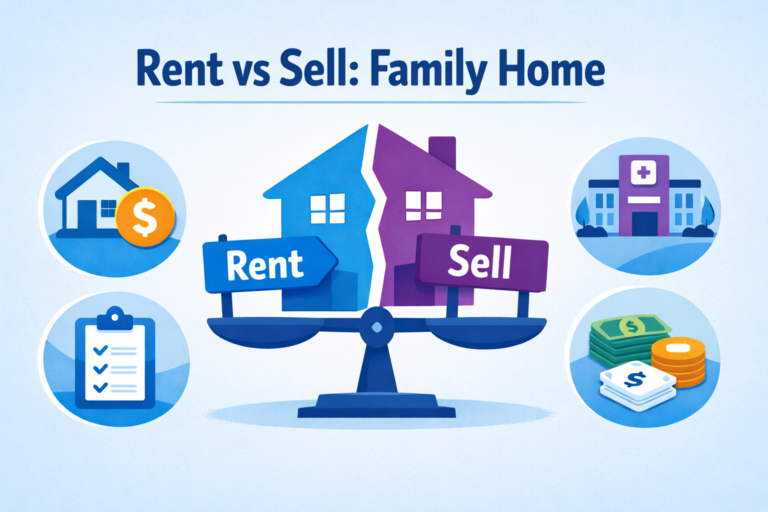
Entering residential care is a significant life transition that brings with it numerous financial decisions. Among the most pivotal is choosing whether to rent or sell the family home.

In 2021, 81.9% of individuals aged 70 to 74 owned their home, according to the Australian Institute of Health and Welfare’s analysis of ABS data. For many, their home represents a significant portion of their wealth, which can impede their lifestyle needs or create challenges in funding care.

This blog post aims to demystify the concepts of RAD (Refundable Accommodation Deposit) and DAP (Daily Accommodation Payment), providing you with the knowledge needed to make informed choices.

One critical criterion to qualify for extended land use concessions is a long-term continuous attachment to the land, defined as 20 years or more.
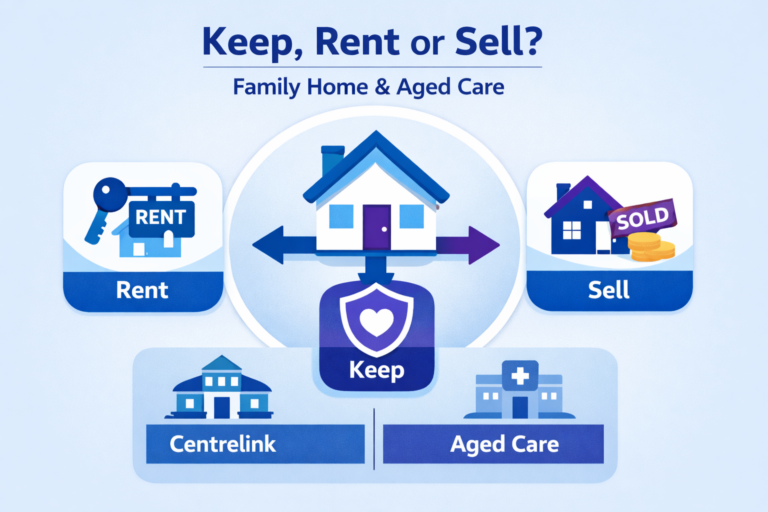
Family home plays a crucial role in determining eligibility for the age pension and liability for aged care fees. Therefore, deciding the fate of a former home is a major consideration for those transitioning into aged care.

Homeownership arrangements are not always simple. They may not involve a single person or a couple owning the family home. Other homeownership arrangements can change the Centrelink/DVA and aged care assessments of the family home.
Entering aged care is a significant life transition that involves careful financial planning and decision-making. Avoiding common financial mistakes can ensure a smoother experience and better quality of life for seniors.

The Federal Budget 2024 has brought significant changes to various sectors, with aged care funding being one of the primary focus areas. This article explores the implications of these budgetary allocations and their impact on aged care in Australia.

As Australians age, the financial burden of aged care becomes a significant concern. Equity release offers a viable solution for many, allowing homeowners to tap into the value of their property to fund their care needs without the need to sell their beloved home.

Aging brings a myriad of challenges, and one of the most significant is making decisions regarding care and financial management. Powers of Attorney (POA) are crucial legal instruments that ensure these decisions are made in the best interest of the elderly, safeguarding their autonomy and wellbeing.

Navigating the complexities of aged care financial planning can be daunting, but with expert advice, the path becomes clearer.
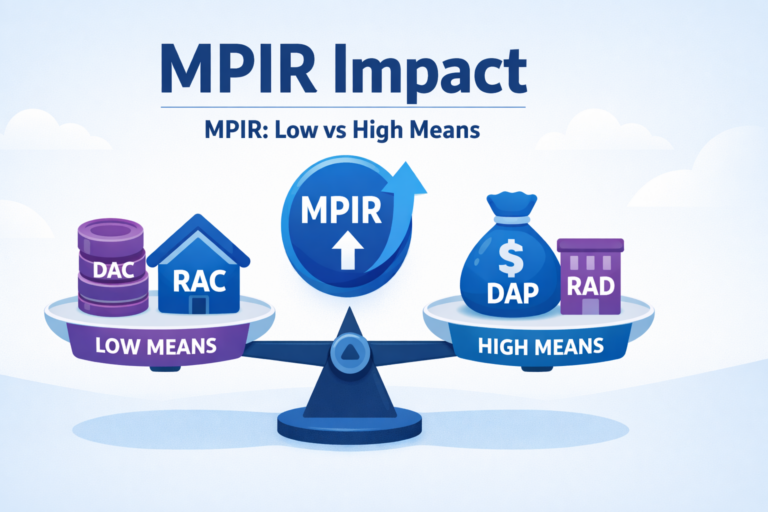
In Australia, the maximum permissible interest rate (MPIR) plays a significant role in determining the cost of aged care accommodation for residents.

The decision between moving into a retirement village or opting for residential aged care is nuanced, influenced by our health, levels of independence, and the kind of support we envisage needing in the future.

Retirement planning often centres around the vision of a carefree era, filled with leisure and the freedom to pursue long-held aspirations. Yet, amid these plans, a pivotal aspect that frequently goes unaddressed is the potential cost of aged care.

Dementia, a condition characterized by a decline in cognitive function, can significantly impact an individual’s daily life and sense of independence.

In the ever-fluctuating real estate market, individuals moving into or already residing in aged care face significant challenges regarding the management of their former homes.

In the realm of aged care, home care stands out as a beacon for those seeking to maintain their independence in the comfort of their own home.

The journey to select a residential aged care facility is multifaceted, involving numerous factors that can significantly affect the well-being of older Australians.

In a significant stride towards ameliorating the financial wellbeing of its citizens, the Australian government is set to augment social security payments for around five million Australians.

On Monday, 11 March, the government unveiled the long-anticipated final report from the Aged Care Taskforce, marking a pivotal moment in the ongoing discourse surrounding aged care reform.

This blog post aims to break down the different types of aged care fees, explore government assistance programs available to non-homeowners, and discuss strategies for managing costs effectively.

This blog post aims to shed light on the financial landscape of aged care in Australia, explore strategies to maximise government assistance, and offer practical tips for optimising your financial resources.

In this blog post, we’ll break down the different types of aged care fees and explain how each is impacted by the current economic climate.

This blog post aims to shed light on these concerns and guide you through essential steps to ensure your wishes for asset distribution are clear and protected.

This blog post will equip you with the knowledge and tools to navigate the waitlist system effectively.

Planning for aged care can feel overwhelming, especially when managing your superannuation alongside other financial considerations. In this blog post, we’ll provide a clear and concise guide to handling your superannuation in aged care. We’ll simplify complex terms, explore key decisions, and offer valuable strategies to help you make informed choices about your financial future….

This blog post will serve as your compassionate guide, navigating you through the process with clear information, practical advice, and a focus on making the transition as smooth and stress-free as possible for both you and your loved one.

In this blog post, we’ll delve into the specific benefits of prepaid funeral plans for Aged Care planning. We’ll explore how these plans can benefit your finances, provide emotional comfort, and simplify the process for your family.

Growing older is a natural part of life, but for many Australians, the thought of needing aged care can be daunting. Planning ahead for aged care can make a world of difference, both for you and your loved ones.

This blog post offers a clear and concise guide to one potential option: home equity release.

This blog post offers a practical guide – a roadmap for families working together to achieve affordable and fulfilling aged care solutions.

Whether it’s home support or residential care, the costs can be substantial. Navigating the aged care system and ensuring its affordability can feel daunting.

Learn how much a nursing home cost in Australia is and the factors that influence them.

Learn about the cost of respite care and the factors that influence them.

Entrusting a substantial sum of money to secure a place in residential aged care may seem daunting, but understanding the intricacies can unveil financial benefits and savings on fees.

Navigating the complexities of moving into residential aged care can be an overwhelming experience, fraught with potential pitfalls and challenges.

Aged care services can be essential for older adults who need help with daily activities, such as bathing, dressing, and eating. However, accessing aged care services can be difficult, especially for those with limited financial resources or who live in rural or remote areas.

Aged care can be a significant financial burden, both for individuals and their families. The Australian Government provides some financial assistance, but the cost of aged care can still be high, especially for those who need high-level care.

The cost of aged care in Australia is rising, and many people are looking for ways to fund their care without having to sell their home or rely on government assistance. One option is to use your superannuation.

If you are approaching retirement age, or are already retired, you may be wondering how to get the most out of your aged care pension.

As we traverse the journey of life, the importance of securing our future, especially in the golden years, becomes paramount.

In this article, we will delve into the new age pension rates and limits effective 20th September 2023.

This comprehensive guide aims to provide you with all the crucial rates and thresholds effective from September 20 to December 31, 2023.

In this article, we will delve into the specifics of the Intergenerational Report and why it’s crucial for you to consider aged care planning now rather than later.

The current aged care finance system often leaves middle-income individuals with limited access to quality care, undermining the principle of fairness.

In this blog post, we’ll provide you with insights into financial abuse of the elderly, help you recognize the warning signs, discuss the risks involved, and most importantly, offer guidance on how to prevent it.

In this blog post, we’ll explore the key components of healthy ageing, the importance of financial planning for seniors, ways to ensure your financial security in retirement, and how to fund aged care services if and when they’re needed.

In this blog post, we’ll delve into the world of reducing aged care costs.

In this blog post, we’ll break down how the Australian government supports aged care, making it easier for you to understand the options available to you or your loved ones.

In this blog, we’ll explain how home care packages work, who is eligible, and what the funds can be used for.

In this article, we’ll delve into the world of granny flat interest, unravelling its definition, benefits, and implications for both occupants and property owners.

Caring for someone you love is a noble and vital role, but it can also bring about financial challenges. Whether you’re looking after an elderly family member, a sick friend, or a disabled loved one, the costs of caregiving can add up. That’s why it’s important to know about the financial support available to caregivers…

This blog post is aimed at providing valuable insights to help you avoid common mistakes and make the best choices for your aged care needs.
In this blog post, we will take you through the ins and outs of the Aged Care Funding Instrument in a clear and concise manner

In this article, we will explore the key concepts and strategies to help you make informed decisions about managing your assets for aged care.

In this blog post, we will explore effective strategies to maximise your Age Pension payments while staying within the legal and financial boundaries. By employing these techniques, you can potentially increase your pension and enjoy a more comfortable retirement.

As our loved ones enter their golden years, ensuring they receive the best possible care becomes a top priority. In Australia, the My Aged Care website plays a pivotal role in providing support and assistance for seniors and their families navigating the aged care system. Whether you’re seeking in-home services or considering residential care, My…

In this blog post, we will explore the aged care complaints scheme and provide you with a clear understanding of how it works.

In this blog post, we will explore various aspects related to quality of life in aged care, ranging from the importance of social activities and nutrition to the impact of mental health and end-of-life care.

In this blog post, we will provide you with guidance on how to talk to your parents about aged care

In this blog post, we will explore the concept of duty of care in aged care, its importance, the specific duties of aged care workers, examples of breaches, and the legal and ethical requirements associated with it.

This blog post will compare and contrast in-home care and residential aged care to help families in Australia make an informed decision.

In this blog post, we will delve into the income and assets test for aged care and explain its significance for elderly individuals and their families. Whether you’re considering aged care options for yourself or a loved one, understanding these tests and their financial implications is crucial.

s our loved ones age, making informed decisions about their care becomes paramount. Among the various considerations, understanding means tested care fees and how they are calculated is crucial for families in Australia.

In this blog post, we are going to provide advice on options that may work for those who need or want to move out of their former residence including selling, renting out, gifting and keeping it as an asset possibly for future generations of your family.

As the population ages, the need for quality aged care services in Australia has become increasingly important. Finding the right aged care provider can be a complex and daunting task, with numerous factors to consider. In this guide, we will explore the key considerations when selecting an aged care provider, including costs, facility types, accommodation…

In this guide, we will explore the various fees and charges involved in aged care.

In this blog post, we will explore the different types of residential care facilities, including nursing homes, assisted living facilities, and care homes for the elderly. Whether you’re searching for “nearest care home to me” or interested in learning about “residential aged care,” this guide will help you understand your options.

In this comprehensive guide, we will explore the key aspects of the aged care sector in Australia, shedding light on the system, funding, challenges, and available services.

The recently announced Australian Federal Budget 2023-2024 brings encouraging news for clients accessing aged care services. Despite the government’s need to secure an additional $11.3 billion over the next four years to fund a 15% increase in award wages for 250,000 aged care workers, clients will not face an increase in aged care fees. While…

In recognition of the rising costs associated with aged care, Services Australia has adjusted rates and thresholds – effective from 20 March.

If you or your loved one are considering aged care, you might be wondering, “Do I need to sell my home for aged care?” Entering aged care can be an emotionally and financially challenging decision.

The number of Australians over the age of 70 is expected to reach nearly four million in the next two decades, which means that aged care will be an issue that will affect an increasing number of families.

Christmas is a time for family, and the New Year is a time for setting goals and making positive changes. Combining the two can be a great way to ensure that your loved ones are taken care of and that everyone is on the same page about what the future holds.

If you’re considering moving into an aged care facility in Australia, you’ll likely need to go through an ACAT assessment. The assessment involves an interview and a physical examination, and it’s used to assess your needs and determine which type of aged care facility would be the best fit for you.

Should we pay the accommodation amount as a RAD or a DAP is one of the main decisions we help our clients to make, when a loved member of the family is entering residential aged care.

In this blog post, we’ll outline some of the ways in which an aged care consultant can help you and your loved ones make the most of this important stage in your lives.

When you think about transferring or gifting land to one of your family members, there are a few reasons why this might be on the radar. One major driver we see for moving ownership is tax optimisation (usually between spouse), and protection of assets.

As Australia’s population ages, more and more people are finding themselves in the position of needing to care for an elderly relative. In many cases, this means providing them with consumer directed care (CDC). But what is CDC, exactly? And how can you make sure that your loved one gets the best possible care under this arrangement?

If you’re like me, you have a loved one who is getting up there in years. Maybe they even live with you. You’ve probably thought about what would happen if something happened to you and they were left alone. That’s where short term respite care comes in.

This time may come when you need to make a financial decision on behalf of a parent as an Enduring Power of Attorney (EPoA). Is this an honour or a burden? It can be both, so the person taking on the role needs to understand both the legal obligations as well as family responsibilities.

Because everyone’s needs and circumstances are different, a range of home care services are available to you – the challenge is selecting the right and best home care provider to meet your needs.

Moving into residential aged care is a move to a new home. Even though this is not a home you are buying, if you think about it in terms of a property transaction it might help you to build a checklist to make the right choice.

Most people want to remain independent throughout retirement and to stay in control of where and how they live. But your ability to do so may depend on your health and physical well-being. As we age, some things become harder to do on our own.

If moving into residential care, do you really have to sell your home? What are your choices? Myths and misunderstanding about the rules can add to anxiety and confusion.

In Australia, if you have a lot of money, you can’t get help paying for home care. That’s because the government only offers subsidies to people who are judged to be “assets test positive.”

As you age, choosing in-home care or home care services and bringing support into your home can help you to remain independent for longer and improve your quality of life. But understanding how to access in-home care services can be hard to navigate. So, what’s important to know now?

Making your home age-friendly through home modifications may help an elderly person to stay in their home for longer, making the home safer and more accessible.

Understanding how home care might work for you, needs a reality check around waiting times, adequacy of the care available and costs. Understanding fees and financial implications should be at the top of your research checklist.

Supporting a person with dementia is tough and challenging , but independence and quality of life can still be achieved with the right support and a few changes.

We all lead busy lives so juggling family, work and personal responsibilities can be complicated – particularly when people we love need increasing levels of care and support. This article explains the sandwich generation and takes a look at what to consider and where to start when you have older parents.

In Australia, we are lucky that government subsidies can help with the aged care costs, but you will have to jump through hoops to be approved. And you may have long waiting times before the government money becomes available (particularly home care). This article takes a quick look at the three steps for approval.

We all know the saying, “home sweet home.” But did you know that where you call home can actually affect your age pension in Australia? Yep, it’s true! If you’re considering retiring down under, here’s what you need to know about how your living situation can impact your retirement income.

Planning for the frailty years or future – and all the challenges it may bring – can help achieve quality of lifestyle as well as quality of care.

So for some people, a move into residential aged care may be a better alternative. Careful planning ahead of time can make all the difference and remove a lot of the stress at the time when a decision needs to be made.

It would be a great achievement for most people to have enough saved up so that they don’t think about retiring in their later years. Unfortunately, saving money for retirement isn’t as easy as you may think. Therefore, it is important to plan and prepare for retirement financially.

The common question when it comes to retirement is ‘how much is enough?’. But regardless of how much you have put aside, there’s a significant potential cost in retirement that is often not considered, and if ignored, it can undermine our plans – aged care.

World Elder Abuse Awareness Day (WEAAD) on 15 June puts a spotlight on issues around elder abuse – not just physical abuse, but also financial abuse.