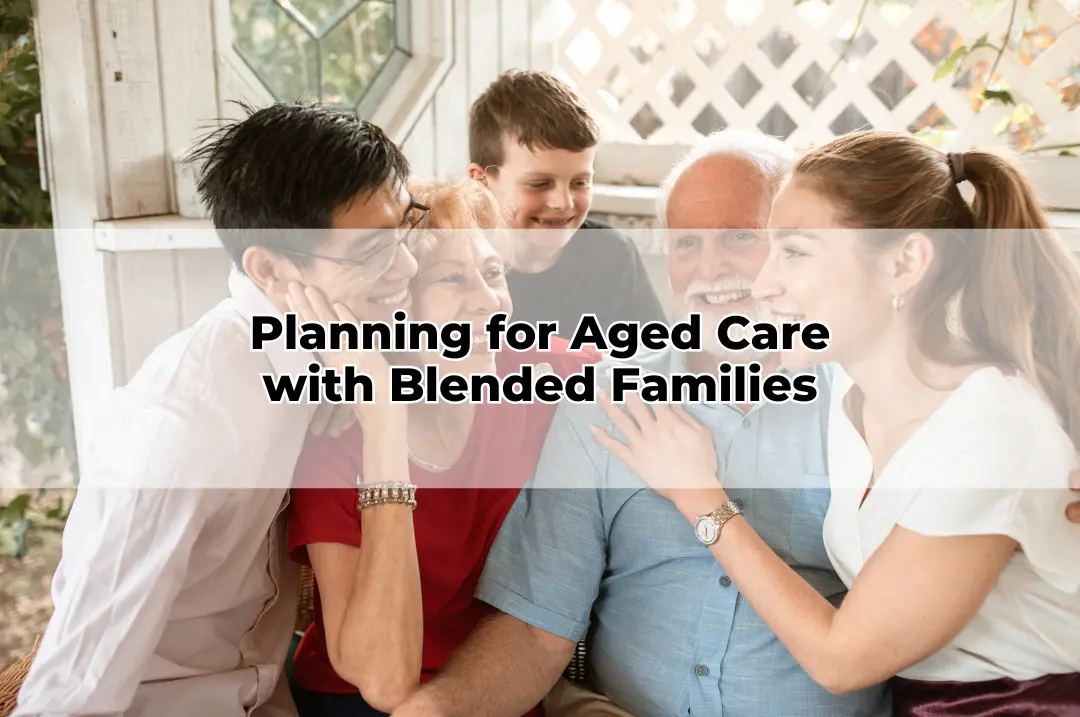
Planning for Aged Care with Blended Families
Table of Contents
ToggleThe aged care journey becomes significantly more nuanced when blended families are involved. With remarriages, stepchildren, de facto partnerships, and intergenerational financial commitments in the mix, planning for residential aged care or home support services requires both sensitivity and strategic foresight. Financial decisions are no longer straightforward, and emotional tensions can complicate even the most well-structured plans. The objective is to ensure the older person receives appropriate care without fuelling disputes or compromising the financial security of other family members.
The Definition of a Blended Family in Aged Care Contexts
A blended family, within the aged care landscape, refers to a familial structure that includes children and stepchildren from previous relationships, as well as new partners or spouses. These arrangements often result in multiple financial interests and competing expectations around inheritances, caregiving responsibilities, and accommodation arrangements. Recognising who has legal standing and who may feel entitled-whether rightly or wrongly-is the first step toward mitigating future friction and developing a sustainable care strategy.
Legal Considerations: Who Has Decision-Making Authority?
Aged care decisions often require substitute decision-makers, particularly when the individual lacks capacity. In blended families, this can trigger legal ambiguity. Enduring Powers of Attorney and Advance Care Directives must be current and clearly name the decision-makers. Without formal documentation, disputes may arise between biological children and stepchildren or current partners, delaying necessary care decisions and risking welfare. It’s imperative to proactively define legal roles and responsibilities early to prevent discord.
Financial Entanglements: Clarifying Ownership and Contributions
Blended families frequently involve shared or separate financial arrangements-properties held in various names, bank accounts with complex histories, and entitlements accrued across multiple relationships. When entering aged care, the means-tested assessments by Centrelink can be significantly affected by the financial structure of the family. Clear documentation of ownership, loans, and gifting histories is critical. This ensures the financial profile used for aged care fees is accurate and not unduly penalising.
Navigating Accommodation Decisions with Multiple Stakeholders
Deciding whether a parent enters residential aged care, remains at home with supports, or moves in with family is often influenced by multiple adult children and a current spouse. Each party may hold differing views on what constitutes appropriate care. Establishing a forum for collaborative discussion-ideally facilitated by a financial adviser or mediator-can help balance interests and uncover practical compromises. It’s essential to separate personal preferences from the aged person’s best interests.
Implications of the Aged Care Means Test in Blended Households
The aged care means test scrutinises assets and income, and it does not always accommodate the complexity of blended family arrangements. For example, the family home may be owned jointly with a current spouse but may also be expected as an inheritance by children from a previous marriage. Understanding how Centrelink assesses assets like granny flats, life interests, and jointly owned property is vital to avoid unexpected fees or loss of pension entitlements.
Strategies to Protect Inheritances in a Blended Family
Inheritance planning becomes delicate when a new spouse enters the picture. Biological children often fear disinheritance, while the current spouse may rely on shared assets for financial security. Testamentary trusts, life interests in property, and well-drafted wills are essential tools to honour both obligations and expectations. Financial advisers must work collaboratively with estate planning professionals to build flexible frameworks that can be adapted to changes in health, relationships, and legislation.
Supporting the Caregiver Spouse Without Jeopardising Entitlements
A new spouse who assumes the caregiver role often does so at the cost of their own financial independence. Their role must be acknowledged and supported through proper financial planning. However, excessive financial transfers or asset restructuring to their benefit can affect the aged care resident’s entitlements. Care must be taken to strike a balance that avoids deprivation assessments and maintains both parties’ wellbeing and eligibility.
The Role of Family Agreements and Documentation
Verbal agreements are common but problematic in blended families. Promises made to stepchildren or spouses about future care, property rights, or financial support need to be converted into formalised family agreements. These documents can clarify expectations, outline financial contributions, and reduce future disputes. Having all parties participate in this process, facilitated by professionals, ensures transparency and promotes longer-term familial cohesion.
Aged Care Fees: Who Pays What and When?
Understanding the breakdown of aged care fees-basic daily fee, means-tested care fee, accommodation payments, and optional extra services-is crucial when more than one family unit is involved. Contributions should be aligned with each party’s financial capacity and expectations. Where multiple adult children are involved, disagreements about who should pay what can delay timely access to care. Financial modelling and impartial advice help ensure fees are manageable and fair.
Gifting, Deprivation, and Centrelink Compliance
Gifting money or property to children, new spouses, or grandchildren may seem generous but can be problematic. Centrelink applies deprivation rules to gifts exceeding allowable thresholds within five years, impacting the means-tested care fee. In blended families, where gifting may be used to favour certain heirs or meet unspoken obligations, this can inadvertently increase costs or delay access to subsidised services. Comprehensive advice on timing and structuring of gifts is essential.
Engaging Independent Third Parties to Manage Conflict
Blended families are ripe for interpersonal conflict, especially during times of stress or when aged care transitions occur suddenly. Engaging independent parties-such as a financial adviser, aged care consultant, or family mediator-can neutralise emotional bias and reframe discussions around solutions rather than grievances. This is particularly important when no single person has clear authority or when communication between family branches has historically been strained.
Tailoring Aged Care Strategies to Family Dynamics
There is no one-size-fits-all solution for aged care in blended families. Each situation requires a bespoke strategy, considering emotional attachments, legal frameworks, financial obligations, and personality dynamics. Planning should start early and evolve over time. Scenarios such as the death of a parent, remarriage, or a sudden health crisis demand fluid, well-documented plans. Flexibility, not rigidity, is the key to sustainability.
Incorporating Superannuation and Pensions into Care Planning
Superannuation balances, account-based pensions, and defined benefit schemes can all impact aged care affordability and Centrelink assessments. In blended families, these assets may have binding death benefit nominations favouring one family branch over another. Ensuring superannuation structures reflect current intentions and optimally support care costs-while still considering legacy goals-requires specialist financial input. Unaddressed, this area can become a source of both financial leakage and familial conflict.
Long-Term Planning for Surviving Spouses and Stepchildren
When one partner in a blended couple enters care or passes away, the surviving spouse’s financial stability can be compromised-especially if they are not the legal owner of the family home or have limited independent income. Planning should account for this, using structures such as life estates or income streams that protect the survivor while preserving an inheritance for children. The interplay between aged care funding, estate planning, and emotional equity is critical.
The Importance of Reviewing Plans Regularly
Family dynamics shift. New partners emerge, stepchildren grow older, and financial regulations change. Aged care plans must be dynamic documents, reviewed annually or upon major life events. What worked at the time of retirement may be outdated when aged care is needed. Ongoing advice ensures the strategy remains compliant, affordable, and appropriate to evolving relationships and legal contexts.
Conclusion
Blended families present unique challenges in aged care planning, but with early engagement and considered strategy, these challenges can be transformed into opportunities for unity and security. Financial advisers and aged care specialists must lead with empathy, legal awareness, and structured planning to safeguard the interests of all involved-most importantly, the individual receiving care.