
How to Structure Your Finances for Flexible Aged Care Choices
Table of Contents
ToggleAged care in Australia has evolved into a complex and multifaceted ecosystem, where financial structure directly dictates the degree of flexibility and control one retains. Whether transitioning into residential care, remaining at home with assistance, or navigating between the two, the ability to exercise choice is tightly tethered to how finances are arranged. Without meticulous planning, even well-intentioned families may find themselves cornered by limited options and mounting costs.
This article addresses the foundational principles of structuring your finances to maximise adaptability across the aged care continuum. From optimising cash flow and unlocking equity to structuring assets and understanding entitlements, it is essential to take a strategic approach early. Aligning your financial affairs with aged care objectives will not only protect capital but also preserve dignity, comfort, and autonomy in later life.
The Spectrum of Aged Care Services
The aged care system in Australia spans a broad range-from basic home support to high-dependency residential aged care. Each option comes with distinct financial considerations. In-home services under the Commonwealth Home Support Programme (CHSP) or Home Care Packages (HCPs) can be subsidised, but often require co-contributions and a degree of self-funding. Conversely, residential aged care involves means-tested fees, accommodation payments, and potential daily care fees.
Understanding the spectrum is crucial because it allows individuals and families to anticipate future transitions and associated costs. Planning for this fluidity means you won’t be forced into premature decisions or substandard care due to financial limitations. Flexible finance structuring ensures that whether ageing in place or shifting into residential care, your chosen path remains viable and responsive to changing health conditions.
Assessing Your Current Financial Position
Before building a strategic framework for aged care, it’s imperative to undertake a thorough audit of your current financial position. This includes liquid assets, real property, superannuation, income streams (such as pensions or annuities), and liabilities. A precise understanding enables more informed decision-making around affordability and eligibility for subsidies or concessions.
Moreover, such an assessment highlights any financial rigidity-such as illiquid investments or low cash flow-that could hinder flexibility. By identifying these choke points early, you can take steps to rebalance the portfolio and position yourself more advantageously for aged care planning. Transparent, well-organised financial records also facilitate smoother Centrelink assessments and engagement with care providers.
The Role of Income and Asset Testing in Aged Care
Income and asset testing plays a pivotal role in determining the level of government support available for aged care services. Centrelink and the Department of Veterans’ Affairs (DVA) conduct assessments to establish eligibility for means-tested subsidies, which can significantly offset costs. However, misunderstanding these rules or failing to plan appropriately can result in reduced entitlements or unexpected expenses.
The asset test includes real estate (excluding the principal residence in some cases), financial investments, and personal belongings. Income assessments factor in pensions, rental income, and deemed income from financial assets. Structuring assets in a compliant yet tax-effective manner can ensure greater access to subsidies while preserving overall net worth. Timely advice can help navigate complex provisions such as the treatment of family homes and gifting rules.
Liquidity: The Cornerstone of Aged Care Flexibility
Liquidity is arguably the most critical element in structuring finances for aged care. Access to funds when needed allows you to respond to sudden changes in health, availability of services, or shifting family dynamics. Whether it’s a refundable accommodation deposit (RAD) for residential care or top-up services at home, flexibility requires funds that can be accessed promptly.
Retaining adequate liquidity often necessitates balancing investments between growth assets and readily available cash reserves. Term deposits, cash management accounts, and offset facilities can offer liquidity without sacrificing safety. Meanwhile, excessive exposure to illiquid assets-such as large direct property holdings-can become a financial constraint. The key lies in strategic allocation that supports both ongoing income needs and contingency planning.
Strategic Use of the Family Home
The family home holds both sentimental and strategic value in aged care financial planning. While it may be exempt from asset tests for a period when a spouse remains in residence, its treatment becomes more complex when the home is vacated or sold.
Deciding whether to retain, rent, or sell the home has significant implications for cash flow, aged care fees, and pension eligibility.
In some scenarios, retaining the home may be desirable for Centrelink benefits or intergenerational planning. In others, liquidating the asset may unlock essential capital to fund aged care. The decision should be driven not by emotion but by a comprehensive analysis of financial impact, tax consequences, and long-term care objectives. Structuring homeownership within trusts or other vehicles may offer added flexibility in certain circumstances.
Managing Superannuation and Retirement Income Streams
Superannuation, account-based pensions, and annuities form the backbone of retirement income. Their treatment under aged care assessments varies, particularly between accumulation and pension phases. Properly structuring these income streams can enhance cash flow, reduce assessable income, and increase eligibility for aged care subsidies.
For example, income from an account-based pension is deemed rather than assessed at face value, which may be advantageous. Lifetime annuities with specific features may receive favourable treatment under the means test. Coordinating withdrawals with aged care obligations-while minimising tax-requires careful timing and expert oversight. Importantly, these income sources must also align with estate planning goals and spouse protection strategies.
Considering Gifting and Financial Contributions to Family
Gifting assets to children or contributing to a family member’s home in exchange for care-often under informal arrangements-can seem appealing but is fraught with potential pitfalls. Centrelink imposes strict limits on allowable gifts, and excessive or poorly documented transfers can negatively impact pension entitlements or result in disputes.
Establishing formal agreements, such as granny flat interests or family accommodation contributions, can help maintain aged care flexibility while protecting rights and access to subsidies. These arrangements should be professionally documented to ensure compliance and avoid future misunderstandings. Strategic gifting, when appropriately timed and structured, can also be used to reduce assessable assets and improve means-tested outcomes.
Navigating Refundable Accommodation Deposits (RADs) and Daily Payments
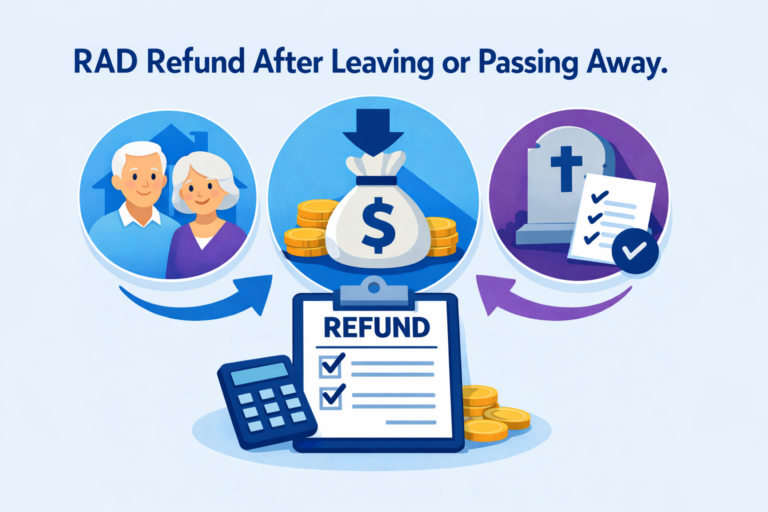
When entering residential aged care, residents typically choose between paying a lump sum Refundable Accommodation Deposit (RAD), a Daily Accommodation Payment (DAP), or a combination of both. The choice significantly influences liquidity, investment returns, and ongoing financial obligations.
Paying a RAD reduces assessable assets over time but ties up capital that may otherwise be used for income generation. A DAP preserves liquidity but incurs ongoing costs that may increase over time due to interest indexing. Blending both approaches can offer a balanced solution-preserving flexibility while controlling outgoings. Understanding the opportunity cost and implications for estate planning is essential when making this decision.
Tax Implications of Aged Care Financial Decisions
Aged care financial arrangements can trigger a range of tax consequences-from capital gains tax (CGT) on property sales to income tax on super withdrawals or investment income. These tax considerations must be factored into the broader financial strategy to avoid unintended liabilities.
For instance, selling the family home may lead to CGT exemptions, but only under specific conditions. Renting the home, on the other hand, may affect aged care fee calculations but can offer useful income with certain tax offsets. Coordination between tax planning and aged care structuring is non-negotiable. The goal is to preserve net wealth while complying with all obligations and maximising after-tax outcomes.
The Importance of an Enduring Power of Attorney and Financial Guardianship
No financial structure for aged care is complete without legal protections in place. An Enduring Power of Attorney (EPOA) ensures that trusted individuals can manage your financial affairs if you’re no longer capable. Without one, families may face administrative hurdles, costly tribunal applications, or restricted access to assets.
Establishing an EPOA early allows you to appoint someone who understands your aged care preferences and financial priorities. Clear instructions and ongoing reviews of this document ensure it remains fit for purpose, especially as laws or family circumstances evolve. Additionally, having a financial guardian or adviser on hand ensures all decisions remain aligned with long-term care objectives and financial well-being.
Partnering with an Accredited Aged Care Financial Adviser
The complexities of structuring finances for flexible aged care choices demand more than a DIY approach. Partnering with an accredited aged care financial adviser provides tailored insights, compliance guidance, and long-range modelling to support your decisions. These specialists understand the interplay between personal finances, government regulations, and care needs.
An adviser helps you plan not just for today’s needs, but for future transitions-ensuring continuity of care, preservation of capital, and peace of mind. Their role is not merely transactional but strategic-adapting your plan as circumstances change and ensuring you remain in control. In a system as dynamic and consequential as aged care, expert guidance is your most valuable asset.
Conclusion
Creating flexibility in aged care is not a matter of luck or timing-it is the outcome of deliberate, strategic financial structuring. By understanding the intricacies of income and asset testing, maintaining liquidity, leveraging your home and superannuation effectively, and securing professional advice, you empower yourself or your loved ones to make dignified, confident choices in later life. Planning now secures options later.