
How Financial Planners Assess Aged Care Affordability
Table of Contents
ToggleAged care in Australia is a significant financial undertaking. As individuals and their families confront the complex matrix of care options, accommodation fees, government means-testing, and ongoing costs, financial planners step in as crucial navigators. The role goes far beyond tallying expenses – it involves strategic analysis, income preservation, and ensuring sustainable care pathways that align with long-term financial wellbeing.
The Cost Spectrum in Aged Care
Aged care costs are multifaceted and subject to constant regulatory change. Financial planners first dissect the full cost spectrum: accommodation payments (RAD/DAP), basic daily fees, means-tested care fees, and additional service costs. Each of these fees can be influenced by personal assets, income streams, and Centrelink assessments. Establishing the total cost profile allows planners to compare care options in financial terms and identify affordability gaps.
Evaluating Personal Assets and Liquidity
Assets play a pivotal role in determining both eligibility and contribution levels to aged care. A comprehensive inventory of tangible and intangible assets – including property, superannuation, bank holdings, and investment portfolios – is taken. However, not all assets are easily liquidated or advisable to sell. A financial planner evaluates asset liquidity to ensure cash flow can support care fees without causing distress or eroding wealth unnecessarily.
Assessing Cash Flow and Income Streams
Understanding income sufficiency is central to assessing affordability. This includes Age Pension payments, rental income, dividends, annuities, and trust distributions. Financial planners use cash flow modelling to forecast whether these income streams can meet recurring aged care expenses. Disparities are highlighted early, allowing time to explore corrective strategies such as re-structuring investments or accessing equity.
The Importance of Government Subsidies and Support
Australia’s aged care system is heavily means-tested, with government subsidies reducing out-of-pocket costs for many. However, calculating eligibility for these subsidies is complex. Financial planners interpret Centrelink rules, adjust asset structures where appropriate, and apply exemptions (like the home exemption in certain cases) to help clients qualify for greater support, thereby reducing financial pressure.
Modelling Long-Term Care Projections
Aged care is not a short-term engagement. Individuals may require care for a decade or longer, with rising care needs and costs over time. Financial planners employ detailed scenario modelling, taking into account inflation, health deterioration, fee escalation, and potential relocations. These long-range projections ensure affordability is not only viable today, but sustainable in years to come.
Strategic Decisions Around the Family Home
The family home often becomes the central point of financial decision-making. Should it be sold to fund a Refundable Accommodation Deposit (RAD)? Rented to generate income? Retained for sentimental or strategic reasons? Financial planners evaluate all implications, including how each decision affects Age Pension entitlements, care fees, and taxation. This analysis helps families make informed, non-emotive choices.
Structuring the Payment of the RAD or DAP
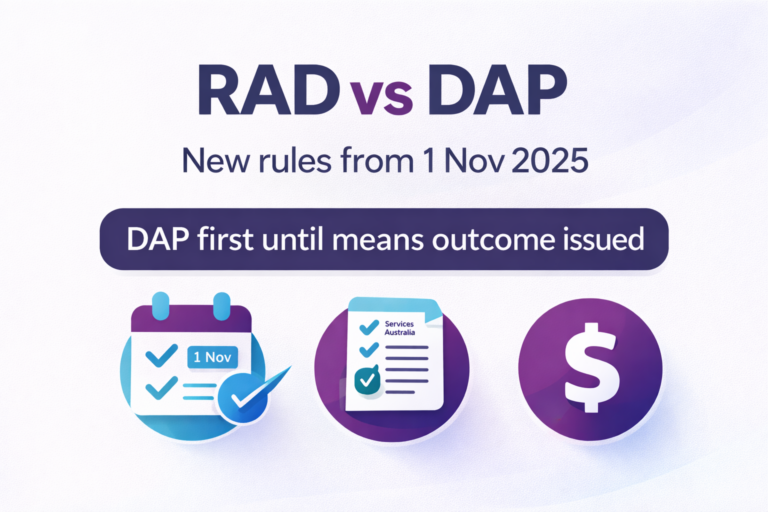
Accommodation payments can be made in several forms: as a lump sum RAD, a daily DAP (calculated at a government-set interest rate), or a combination. Financial planners assess which approach is most financially advantageous. Factors such as investment opportunity costs, risk appetite, estate intentions, and liquidity are all considered before making a recommendation.
Balancing Estate Planning with Aged Care Needs
Clients often wish to preserve an inheritance for their beneficiaries while still accessing quality care. Financial planners navigate this balance by restructuring assets, setting up testamentary trusts, and adjusting superannuation strategies. These measures enable the individual to meet aged care costs while also ensuring their estate is preserved in a tax-effective and legally compliant manner.
Taxation Implications of Aged Care Planning
Every financial move has tax consequences. Selling the family home, withdrawing from super, or earning rental income can impact personal income tax, capital gains tax, and the Age Pension. Financial planners anticipate these outcomes and incorporate tax-effective strategies to mitigate unnecessary liabilities and optimise financial outcomes across multiple domains.
Reviewing and Adjusting Financial Plans Over Time
Circumstances shift – health deteriorates, expenses increase, and financial markets fluctuate. Financial planners conduct periodic reviews of care affordability strategies to ensure continued alignment with the client’s evolving situation. Adjustments might involve asset reallocation, pension recalibration, or renegotiation of care arrangements. Ongoing advice provides continuity and confidence.
Communicating with Family Decision-Makers
Aged care decisions often involve multiple stakeholders. Financial planners facilitate transparent conversations between the person entering care, their enduring power of attorney, family members, and aged care facilities. This communication ensures collective understanding of affordability outcomes and protects the interests of all involved parties, especially in emotionally charged environments.
Avoiding Common Affordability Pitfalls
Misunderstanding means-testing rules, underestimating future costs, or rushing into decisions without advice can lead to financial distress. Financial planners proactively prevent such missteps. By interrogating every detail – from RAD strategies to subsidy eligibility – they construct robust, resilient plans that buffer clients against the unexpected and the unaffordable.
Leveraging Financial Products Designed for Aged Care
Aged care financial advice includes the strategic use of purpose-built financial products. These may include aged care annuities, income stream products, reverse mortgages, or investment bonds. A financial planner assesses suitability and integrates such products into the broader financial plan when they enhance affordability and cash flow management.
Navigating Centrelink and DVA Assessments
Means testing for aged care is conducted by Centrelink or the Department of Veterans’ Affairs (DVA), with stringent reporting requirements. Financial planners assist clients in correctly completing these assessments, disclosing required information, and applying for the appropriate entitlements. They also manage reporting obligations to prevent overpayment or underpayment of care fees.
Tailoring Advice to Cognitive and Legal Considerations
In situations involving dementia or cognitive decline, planners assess the legal structures in place – such as enduring power of attorney and guardianship – to ensure affordability decisions are made in the person’s best interest. This ensures financial choices are not only sound but legally valid and ethically grounded.
The Role of Financial Advisers in Aged Care
An accredited aged care specialist is uniquely equipped to unravel the financial complexities associated with aged care. Their role is advisory, analytical, and empathetic – combining numerical rigour with compassionate client support. They do not simply crunch numbers; they steward families through an emotionally taxing financial transition with expertise and professionalism.
Conclusion
Navigating aged care without strategic financial advice can lead to under-informed decisions, higher costs, and missed opportunities. Financial planners provide clarity, structure, and foresight in what is otherwise a highly complex financial landscape. With an expert guiding the way, families can make confident, well-structured decisions that ensure aged care affordability and dignity in later life.