Power of Attorney and Aged Care: 10 Things to Know
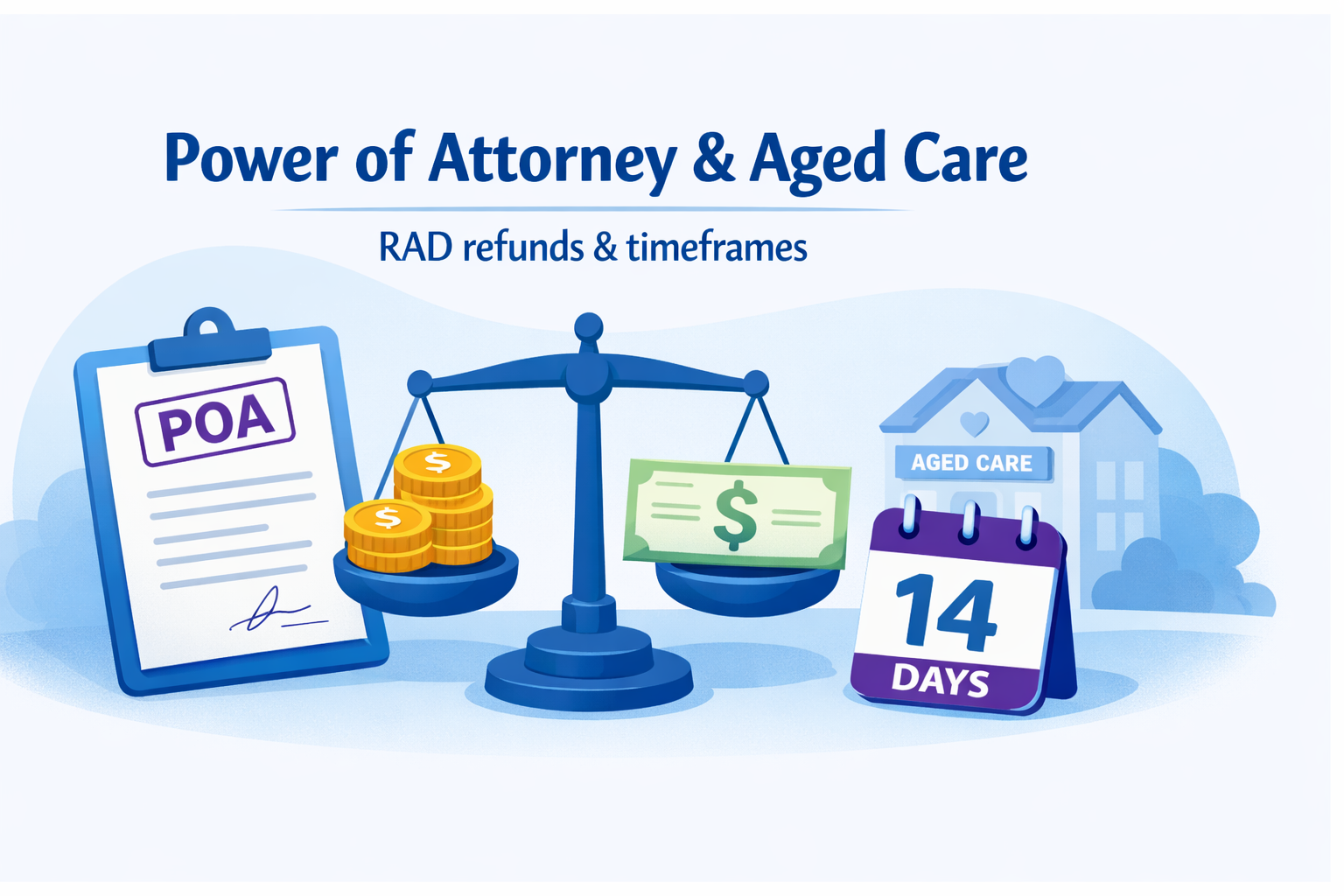
Power of Attorney and Aged Care: 10 Things to Know
Last updated: 13 February 2026. This article is general information only and doesn’t consider your objectives, financial situation or needs. Aged care and Centrelink rules can change. Always confirm details with My Aged Care, Services Australia (or DVA where relevant), and the Department of Health and Aged Care before acting.
Power of attorney and aged care decisions can get messy fast — usually because families are making big financial and legal calls under time pressure. The most common problems we see aren’t “bad intentions”. They’re practical issues like unclear authority, missing paperwork, siblings disagreeing, or signing the wrong thing in a rush.
This guide explains what you need to know before you sign an aged care agreement, sell the family home, pay a RAD, or lodge Centrelink/means testing forms. It’s written for adult children and decision-makers who want clarity, not legal jargon.
If you’re also trying to map out costs, accommodation choices and Centrelink impacts, you may want to read A guide to the costs of aged care and how aged care means testing works alongside this page.
If you want help turning the legal authority and the numbers into a clear plan (RAD vs DAP, home decision, cashflow, and what to sign when), see Aged Care Financial Planning Services. For pricing transparency, visit Aged Care Financial Advice Costs, or reach us via Contact Us.
Key takeaways
- Not all “POA” documents are the same. The right authority depends on the state/territory, the document type, and whether decisions are financial, personal, or medical.
- Aged care providers and banks may ask for certified copies and may have their own verification processes — plan for admin delays.
- Signing a residential aged care agreement is a big step. Make sure the person signing has clear legal authority and understands the accommodation payment choice (RAD vs DAP).
- Centrelink/Services Australia and aged care means assessments are separate systems. Paperwork often overlaps, but the outcomes and timing can differ.
- Home decisions can’t be “undone” easily. Before selling, renting or gifting, understand the aged care and pension impacts.
- Family conflict risk is real. Clear documentation, meeting notes, and a decision checklist reduce later disputes.
Table of contents
- The 10 things to know (quick list)
- What is a power of attorney in an aged care context?
- Before the crisis: documents to gather now
- 1) Check you have the right type of authority
- 2) Confirm capacity and timing (before it’s too late)
- 3) Know what you can sign (and what you shouldn’t)
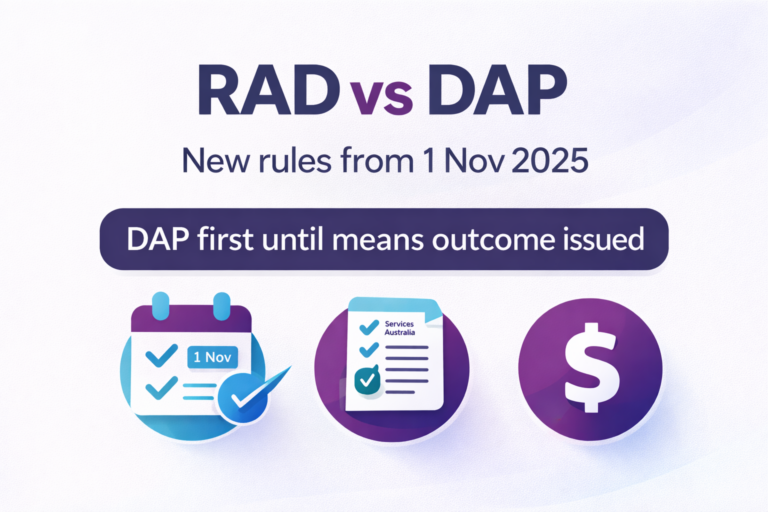
- 4) Understand RAD vs DAP before signing accommodation
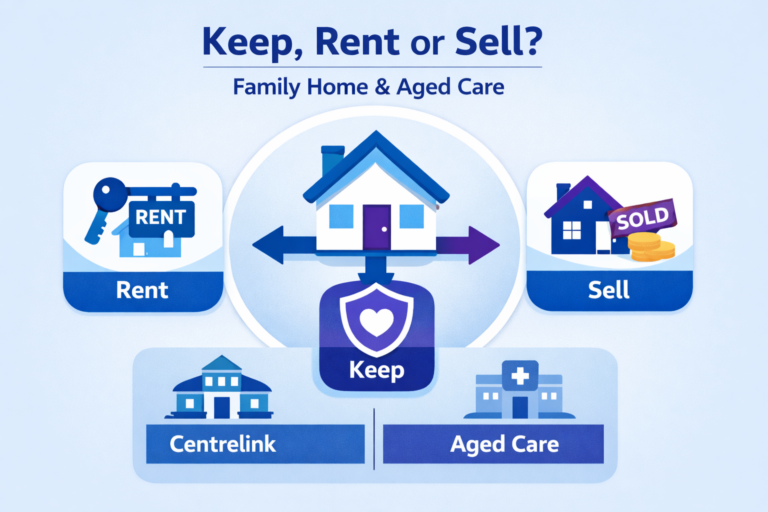
- 5) Don’t rush the family home decision
- 6) Expect Services Australia paperwork and delays
- 7) Keep aged care means testing separate in your mind
- 8) Be careful with “family funding” and gifting ideas
- 9) Reduce family conflict with a simple process
- 10) Know when specialist advice pays for itself
- Worked example: signing the agreement without blowing up cashflow
- Step-by-step decision checklist
- Common mistakes we see
- FAQs
- What to do next
The 10 things to know (quick list)
- Check you have the right type of authority
- Confirm capacity and timing (before it’s too late)
- Know what you can sign (and what you shouldn’t)
- Understand RAD vs DAP before signing accommodation
- Don’t rush the family home decision
- Expect Services Australia paperwork and delays
- Keep aged care means testing separate in your mind
- Be careful with “family funding” and gifting ideas
- Reduce family conflict with a simple process
- Know when specialist advice pays for itself
What is a power of attorney in an aged care context?
A power of attorney is a legal authority that allows someone (the attorney) to act for another person (the principal). In aged care, this often includes practical financial actions like paying bills, managing bank accounts, signing aged care documents, and coordinating assessments.
Because details vary by state/territory and by document type, it’s worth checking the current government guidance and requirements that apply to your situation. Start with My Aged Care for aged care processes and Services Australia for identity/authority requirements when dealing with income support and related forms.
Where your parent still has capacity, the best time to organise documents is before a health event forces urgent decisions.
Before the crisis: documents to gather now
Whether you’re already acting for a parent or you’re preparing “just in case”, gather:
- the power of attorney document (and any related documents) + certified copies
- photo ID for the principal and attorney
- Medicare and Centrelink details
- bank account list, super details, insurance and investment statements
- rates notices, utility bills, and home ownership documents
- a current will (and who the executor is)
- any existing aged care paperwork or provider agreements
If your parent is likely to enter residential care soon, it also helps to understand the key fee buckets and who assesses them. A plain-English overview is here: A guide to the costs of aged care.
1) Check you have the right type of authority
“I have POA” is often not enough. Providers and institutions may ask:
- Is it an enduring authority (continues if capacity is lost)?
- Does it cover financial decisions (the ones most relevant to aged care contracts and payments)?
- Are there conditions (e.g., two attorneys must sign together)?
- Has it been activated (some documents require medical certification of capacity loss)?
Practical tip: keep a short “authority summary” (one page) listing the type, date, attorneys, whether joint/several, and any special conditions. It saves a lot of back-and-forth.
2) Confirm capacity and timing (before it’s too late)
Many families don’t realise capacity is decision-specific and can fluctuate. If your parent has capacity now, it’s usually simpler (and less conflict-prone) to involve them in:
- choosing the aged care home
- agreeing on the accommodation payment approach
- understanding what is being signed and why
Where capacity is uncertain, you may need health professional input and careful documentation. Don’t wait until the admission deadline forces a rushed signature.
3) Know what you can sign (and what you shouldn’t)
In aged care, attorneys are commonly asked to sign:
- entry paperwork and resident agreements
- accommodation payment agreements (RAD/DAP/combination)
- direct debit arrangements
- authority forms for information sharing
- paperwork supporting means assessment processes
Important: signing should match the authority you actually have and the wishes of the person you represent. If you’re unsure, pause and seek advice before committing to an arrangement that is hard to unwind.
4) Understand RAD vs DAP before signing accommodation
Accommodation is often the largest and most irreversible decision families make at entry. If you’re signing as attorney, you should understand what you’re choosing:
- RAD: a refundable lump sum deposit
- DAP: a daily payment (not refundable)
- Combination: part RAD + part DAP
Start with these guides before you sign:
If your family is worried about “what happens to the money later”, read: what happens to the RAD when a resident leaves or passes away.
5) Don’t rush the family home decision
Home decisions are where attorneys can accidentally create long-term consequences. Selling, renting, leaving vacant, or transferring ownership can affect:
- cashflow available to pay fees
- Age Pension position (depending on circumstances)
- aged care means assessment outcomes
- estate planning and “fairness” between children
Before you sign a sale contract or commit to a rental strategy, read: the family home when moving into aged care and renting vs selling the family home.
If one partner remains at home while the other enters care, this is essential: moving into aged care with a partner still at home.
6) Expect Services Australia paperwork and delays
Even with good planning, administration takes time. When you’re dealing with Services Australia, expect identity checks, authority verification, and requests for supporting documents.
Practical tips:
- keep certified copies ready
- store a single “source of truth” folder (digital + hard copy)
- write down dates, reference numbers and who you spoke with
- don’t assume aged care provider paperwork replaces Services Australia requirements
7) Keep aged care means testing separate in your mind
Families often blur together:
- Age Pension/income support rules (Services Australia/DVA), and
- aged care fee assessment (aged care means assessment processes).
They overlap, but they are not the same thing. If you want a clear explanation of how the aged care financial assessment works, start here: aged care means testing.
For official process information, use My Aged Care.
8) Be careful with “family funding” and gifting ideas
When fees feel high, families sometimes consider quick fixes: transferring money, gifting assets, or reshuffling ownership. These moves can create unintended consequences and family conflict — especially if an attorney is acting under pressure.
Before any gifts or transfers are considered, read: gifting and deprivation rules and how they can affect aged care fees and the Age Pension.
If your situation involves trusts or complex ownership, treat this as higher risk planning and get advice early: trusts and complex ownership structures in aged care.
9) Reduce family conflict with a simple process
Many disputes aren’t really about money — they’re about trust, transparency and communication. A simple process can reduce blow-ups:
- hold a short family meeting (even by Zoom) to explain what’s happening and why
- document key decisions (date, attendees, what was agreed)
- use one shared folder for documents
- separate “facts” (fees, rules, timelines) from “preferences” (which home, which room)
If the RAD is involved and inheritance expectations are sensitive, this guide helps set realistic expectations: the impact of RAD on estate planning and inheritance.
10) Know when specialist advice pays for itself
Specialist advice is most valuable when:
- there’s an at-home spouse and cashflow must be protected
- the family is choosing RAD vs DAP and wants a defensible, numbers-based recommendation
- the home decision (sell/rent/retain) is uncertain
- assets are complex (trusts, companies, multiple properties)
- siblings disagree and you need a clear process and documentation
Aged care decisions are rarely “one choice”. They’re a sequence of choices with timing and paperwork. If you’d like help modelling options and turning them into a plan you can act on, start here: Aged Care Financial Planning Services.
Worked example: signing the agreement without blowing up cashflow
Scenario (example only): Mum is entering residential aged care. You are attorney for financial matters. The home offers an accommodation price payable as a RAD, DAP or combination. The family is tempted to “just pay the RAD” because it’s refundable.
Step 1: Separate “refundable” from “affordable”. Paying a larger RAD can reduce DAP, but it can also leave Mum cash-poor for ongoing fees and personal spending.
Step 2: Check the bigger fee picture. Accommodation is only one part of the overall cost. Use this overview: A guide to the costs of aged care.
Step 3: Make the accommodation choice with a plan. A common approach is a part RAD strategy that reduces ongoing DAP while preserving a buffer. To understand the trade-offs, read Understanding RAD and DAP and RAD vs DAP.
Step 4: Document the decision. As attorney, keep a short note: what options were considered, why the chosen approach fits Mum’s needs, and how it protects cashflow.
This example is illustrative only. Outcomes depend on assets, income, family circumstances and current rules.
Step-by-step decision checklist
- Confirm the authority: correct document type, certified copies, any conditions (joint attorneys, activation rules).
- Confirm capacity and wishes: involve your parent as much as possible while capacity allows.
- Gather the core paperwork: ID, Medicare, bank/super statements, home documents, will/executor details.
- Start the right processes early: aged care steps via My Aged Care; income support/admin steps via Services Australia.
- Understand fees: read aged care costs and means testing.
- Decide accommodation funding: read RAD & DAP guide and RAD vs DAP.
- Home decision (if relevant): read family home in aged care and renting vs selling.
- Avoid “quick fix” transfers: check gifting rules before moving assets.
- Keep a decision log: one-page record of what was decided, why, and who was consulted.
- Get advice where it matters: complex assets, at-home spouse, conflict risk, or unclear authority.
Common mistakes we see
- Signing first, reading later. Providers are often helpful, but you still need to understand what you’re committing to.
- Assuming POA automatically covers everything. Document type, conditions and state rules matter.
- Paying too much RAD and becoming cash-poor. “Refundable” doesn’t mean “safe for cashflow”.
- Making a rushed home decision. Selling quickly can lock in outcomes you didn’t intend.
- Trying gifting/asset transfers without checking rules. This can backfire and create disputes.
- Not documenting decisions. Lack of a paper trail is where family conflict escalates.
FAQs
Can a power of attorney sign an aged care agreement?
Often yes — if the document gives the attorney appropriate authority for financial decisions and the signing requirements are satisfied. Providers may request certified copies and verification. If you’re unsure, get legal advice before signing.
Do I need a power of attorney before applying for residential aged care?
Not always, but it is strongly helpful if your parent may lose capacity or can’t manage paperwork. Aged care processes run through My Aged Care, while income support/admin steps are commonly handled through Services Australia.
What if my parent refuses care but it’s unsafe at home?
This is sensitive and often requires medical input, capacity assessment, and careful family communication. Seek professional guidance early. Don’t assume a power of attorney automatically overrides your parent’s wishes if they still have capacity.
What documents do aged care homes usually ask for?
Typically: identification, authority documents (POA), Medicare details, and information to support fee discussions (income/assets). Requirements vary by provider.
Does power of attorney affect aged care fees?
POA doesn’t change fees by itself, but it affects how smoothly decisions and paperwork happen. For fee fundamentals, see the costs of aged care and aged care means testing.
Should we pay a RAD or DAP if I’m signing as attorney?
It depends on cashflow, assets, timeframe and family circumstances. Start with Understanding RAD and DAP and RAD vs DAP, then model the numbers before committing.
What happens to the RAD if the resident passes away?
RAD refunds have rules and paperwork triggers. For a plain-English guide, see what happens to the RAD after a resident leaves or passes away.
What to do next
If you’re in the middle of a decision (or you can see a crisis coming), the fastest way to reduce stress is to get three things clear:
- Authority: who can legally sign and act?
- Fees: what will actually be paid, and by whom?
- Cashflow: will the plan hold up month after month (especially if a spouse remains at home)?
We can help you model options and turn them into a simple, defensible plan you can act on. Start here: Aged Care Financial Planning Services. For transparency on pricing, see Aged Care Financial Advice Costs. To speak with us, use Contact Us.
General advice only disclaimer
This information is general in nature and doesn’t consider your objectives, financial situation or needs. Aged care and Centrelink rules can change—confirm details with Services Australia/My Aged Care or seek personal advice.
Link map
Internal links
- Aged Care Financial Planning Services → https://agedcarefa.com/aged-care-financial-planning-services/
- Aged Care Financial Advice Costs → https://agedcarefa.com/aged-care-financial-advice-costs/
- Contact Us → https://agedcarefa.com/contact-us/
- A guide to the costs of aged care → https://agedcarefa.com/a-guide-to-the-costs-of-aged-care/
- Aged care means testing → https://agedcarefa.com/aged-care-financial-means-test/
- Understanding RAD and DAP in aged care → https://agedcarefa.com/understanding-rad-and-dap-in-aged-care/
- RAD vs DAP: which option is more cost-effective? → https://agedcarefa.com/rad-vs-dap-which-option-is-more-cost-effective/
- What happens to the RAD after a resident leaves or passes away → https://agedcarefa.com/what-happens-to-the-rad-after-a-resident-leaves-or-passes-away/
- The family home when moving into care → https://agedcarefa.com/the-family-home-when-moving-into-care/
- Renting vs selling the family home → https://agedcarefa.com/renting-vs-selling-the-family-home/
- Moving into aged care with a partner still at home → https://agedcarefa.com/moving-into-aged-care-with-a-partner-still-at-home/
- Gifting rules impact on aged care fees and pension → https://agedcarefa.com/gifting-rules-impact-on-aged-care-fees-and-pension/
- Setting up a trust for aged care expenses → https://agedcarefa.com/setting-up-a-trust-for-aged-care-expenses/
- Impact of RAD on estate planning and inheritance → https://agedcarefa.com/impact-of-rad-on-estate-planning-and-inheritance/
External links
- My Aged Care → https://www.myagedcare.gov.au/
- Services Australia → https://www.servicesaustralia.gov.au/
- Department of Health and Aged Care → https://www.health.gov.au/
- DSS Social Security Guide → https://guides.dss.gov.au/social-security-guide
- DVA → https://www.dva.gov.au/